Netanyahu Faces First Israeli Vote Since Oct. 7 Still Pitching Himself as the Security Choice
With polls showing the country split almost evenly, Israel's longest-serving prime minister could still survive Tuesday's election despite the fallout from the Hamas-led attacks of Oct. 7, 2023.
By True Herald Wire Staff ·
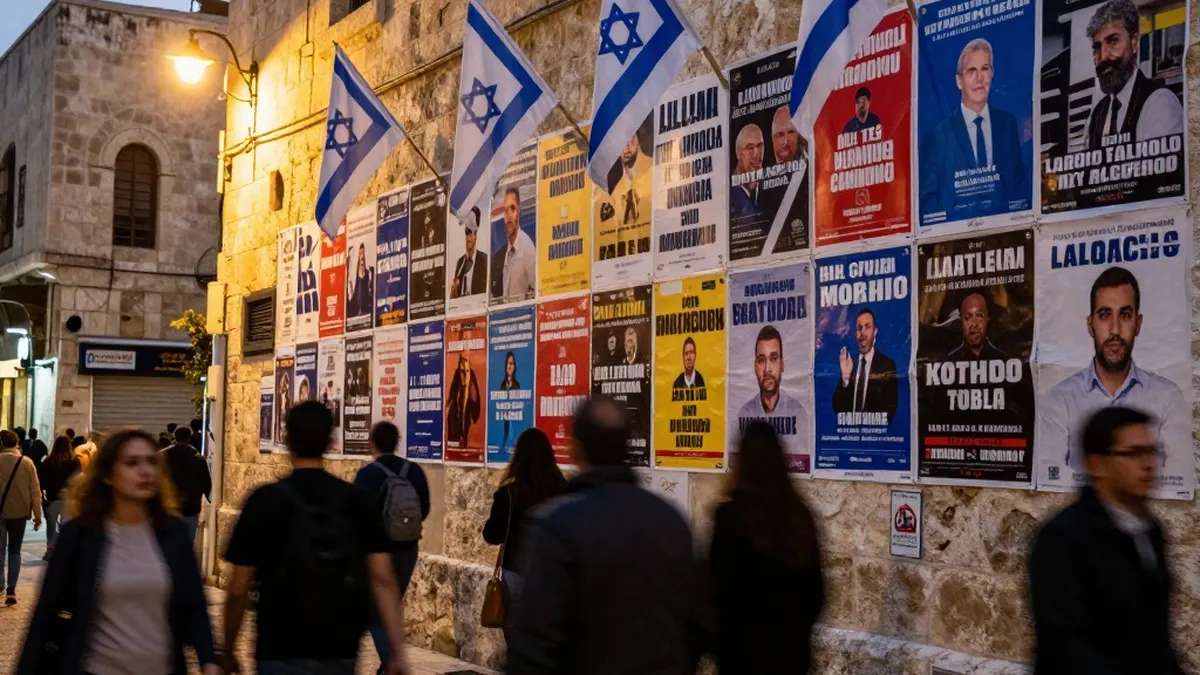
Israel heads to the polls on Tuesday for its first national election since the Hamas-led attacks of Oct. 7, 2023, and Prime Minister Benjamin Netanyahu is still presenting himself as the candidate best able to keep the country safe. Few Israeli analysts are ready to rule out the country's longest-serving leader, even after the deadliest security failure in its history. About 1,200 people were killed in the attacks and 251 were taken hostage.
Polls in the weeks before the vote have consistently shown that neither the pro-Netanyahu nor the anti-Netanyahu bloc is on track to win the 61 seats needed for a majority in the Knesset. Tamar Hermann, a senior research fellow at the Israel Democracy Institute in Jerusalem, told CBC News the nation is "back to where we were Oct. 6" in being divided almost down the middle. She said that could produce inconclusive results or a minority government, raising questions about how long such a government would last. A drawn-out coalition process would leave Netanyahu as caretaker prime minister.
Political scientist Reuven Hazan of the Hebrew University of Jerusalem said Israel has shifted to the right since Oct. 7, which may help explain why the government has not collapsed in the polls. He does not believe Netanyahu, 77, and his far-right partners will ultimately return to power, but said they "should be doing a heck of a lot worse in the polls than they are."
The criticism of Netanyahu is well documented. Reports allege he was repeatedly warned by regional allies and by Israeli intelligence officials that Hamas was planning a major operation, and that he ignored them. Families and friends of hostages also pleaded with him to accept a deal for their early release rather than hold out for "total victory." He is on trial on corruption charges including fraud, bribery and breach of trust, and has refused to appoint a commission of inquiry into the failures of Oct. 7 despite public pressure.
Daniel Seidemann, an Israeli lawyer and longtime peace campaigner, said Netanyahu's hard-core supporters, whom he estimates at about 30 per cent of the population, can be described as a cult whose devotion nothing will pierce. Hermann said some of those voters genuinely love him, a bond she said does not exist on the centre or left. Her institute's polling found that 43 to 46 per cent of Jewish Israelis question whether the warnings given to Netanyahu were reliable, and 60 per cent of those surveyed believe the allegations surfaced near the election as part of an effort to topple him. At a Jerusalem campaign event, supporter Monel Bercovich called him "honest" and praised his tough stance on Iran.
His main challenger is Gadi Eisenkot, a former chief of staff of the Israel Defence Forces who leads the Yashar party. Eisenkot, 66, joined Netanyahu's unity government after Oct. 7 but resigned eight months later. His youngest son was killed in Gaza during the war, and he has promised to establish an Oct. 7 commission of inquiry if elected. Hazan said his military background should appeal to security-minded voters, though his campaign has focused on social issues and national unity.
Eisenkot has also made compulsory military service for the ultra-Orthodox community an issue. Israel's Supreme Court refused to extend their exemption two years ago, despite Netanyahu's efforts, yet he relies on ultra-Orthodox coalition partners to stay in power. Yonatan Lambert, 27, who served in Gaza and will not vote for Netanyahu, said those who opt out of the army or the country "shouldn't get anything from the country."
Seidemann argued that Netanyahu has become less cautious about international opinion and is courting the right-wing settler base, which includes National Security Minister Itamar Ben-Gvir. Settlements are considered illegal under international law, and images of settler violence against Palestinians during the olive harvest have deepened Israel's isolation. Seidemann likened the recent rise in land appropriation and settler attacks in the West Bank to an "end-of-season fire sale" before the election. The deaths of more than 74,000 Palestinians in the war, a figure from Gaza health officials, have received little attention in the mainstream campaign.
Source: CBC News