Navigation Shift: Tesla Constructs Proprietary Maps to Resolve FSD Limitations
Tesla’s AI leadership acknowledges the necessity of in-house mapping infrastructure to address persistent errors in speed limit recognition and route planning.
By Mariana Delgado ·
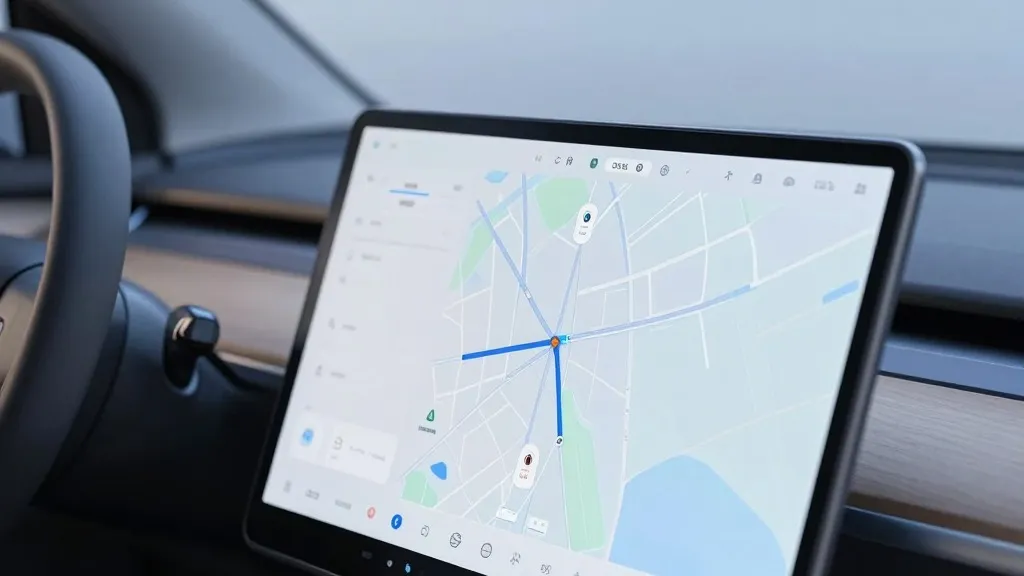
Tesla is constructing its own mapping infrastructure to address persistent errors in its Full Self-Driving system, marking a significant departure from its previous stance. The move aims to resolve common issues such as misreading speed limits, inefficient parking, and suboptimal route selection. This strategic pivot was detailed by the company’s head of AI during the Q3 2026 earnings call.
For years, Tesla’s leadership argued that self-driving systems relying on detailed maps were inherently brittle and unnecessary. Critics note that this new approach mirrors the methodology of Waymo, which maps roads to inform its autonomous vehicles. While Tesla fans have historically distinguished the two approaches, both companies are now effectively using their fleets to gather data that their software cannot independently process.
The initiative was prompted by direct feedback from shareholders. A retail investor asked why Tesla relied on third-party maps when mapping remained a core problem for FSD. In response, Tesla VP of AI Ashok Elluswamy agreed that the company should not depend on external map providers. He explained that Tesla is developing a new AI-based mapping and navigation architecture. This system will leverage collective learning from the fleet while also adapting to individual driver preferences and voice commands.
The implementation will be phased. The new technology will initially handle the start and end of trips with FSD v15. Over the coming months, it is expected to take over broader navigation, parking, and destination management functions. This timeline suggests a gradual integration of the new map layer into the existing software stack.
Tesla’s history with mapping has been inconsistent. When launching Autopilot in 2015, the company claimed it was building high-precision maps with significantly greater granularity than standard navigation. However, at its 2019 Autonomy Day event, CEO Elon Musk reversed this position. He described the previous attempt at high-precision lane maps as a "huge mistake" and a "really bad idea" that made the system "extremely brittle." At the same event, he dismissed lidar as a "fool’s errand," asserting that Tesla could solve driving with cameras and AI alone.
This new development highlights a specific weakness in the current vision-based system. Recent testing by a Belgian road safety group found that FSD exceeded speed limits in 55% of the 30 km/h zones tested in Brussels, often displaying an incorrect 50 km/h limit on the dashboard. In the United States, the NHTSA is considering an investigation into claims that Tesla Robotaxis speed through active school zones. These incidents suggest that the vision system struggles to reliably interpret simple road information, a gap that a dedicated map layer is designed to fill.
The operational model of Tesla’s Robotaxi service also aligns with this mapping strategy. The service currently operates city by city within small, geofenced areas. While Tesla is not yet creating centimeter-level high-definition maps, the fleet-built data could eventually lead to that level of detail. The approach is functionally similar to Waymo’s, where sensor-equipped vehicles map cities before service launch and continue to update those maps as they drive. The primary technical difference remains the presence of lidar on Waymo’s vehicles.
The shift does not negate the value of Tesla’s vision-centric approach, but it underscores the practical need for environmental context. As the company moves toward unsupervised FSD in consumer cars, targeted for Q2 2027, the integration of these maps becomes critical. The company is now solving the same environmental understanding challenges it once claimed could be handled by pure vision, acknowledging that a map built from millions of vehicles offers a distinct advantage in reliability.
Source: Electrek